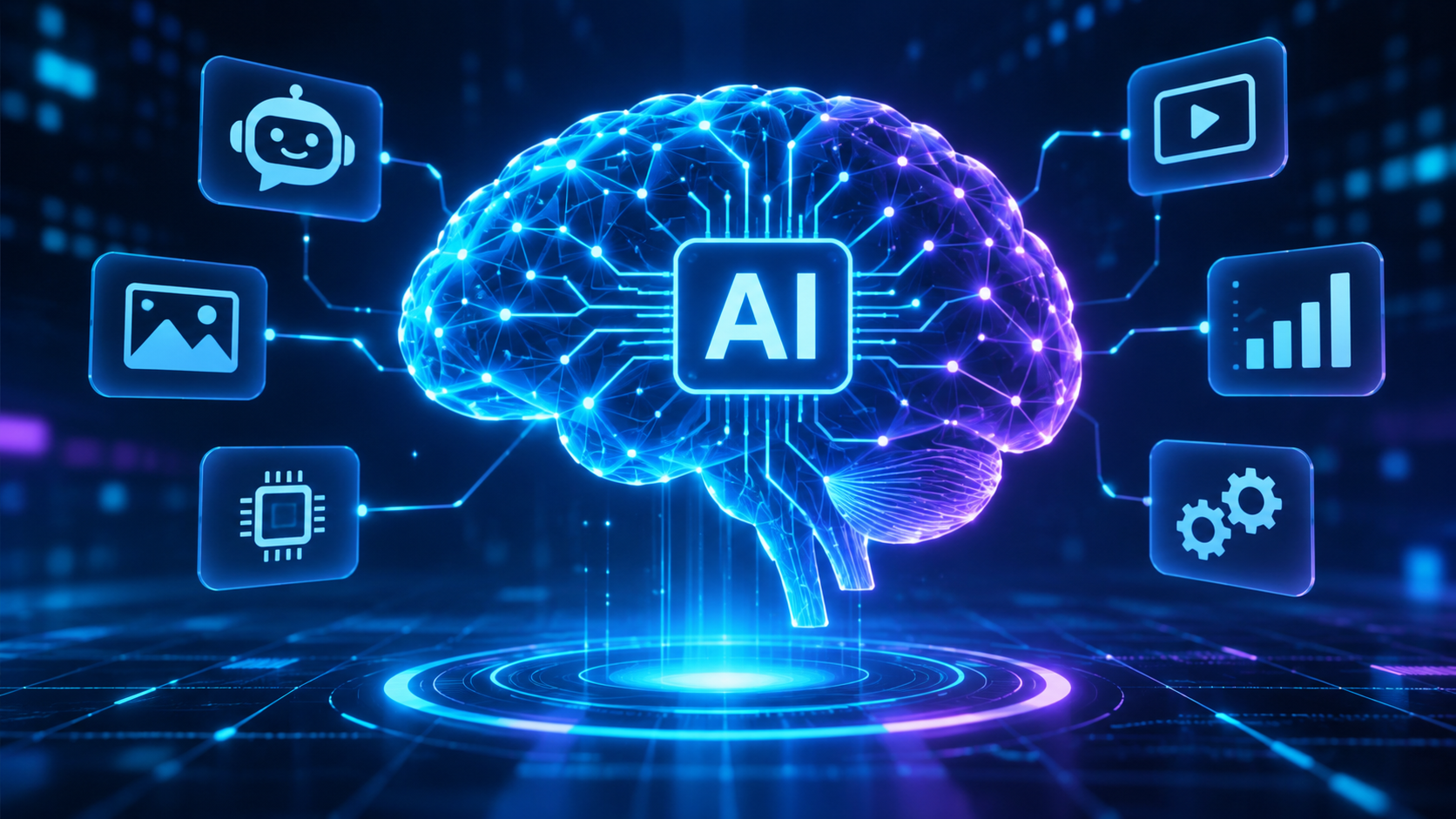
Artificial Intelligence (AI) is becoming part of our everyday lives. From voice assistants and smartphone cameras to chatbots and recommendation systems, AI is changing how we use technology.
But what exactly is Artificial Intelligence? How does it work, and why is everyone talking about it?
Let’s understand it in simple language.
What Is Artificial Intelligence?
Artificial Intelligence, commonly called AI, is a field of computer science that focuses on creating computer systems capable of performing tasks that usually require human intelligence.
These tasks can include:
- Understanding human language
- Recognising images and objects
- Finding patterns in data
- Making predictions
- Generating text, images, and other content
- Helping people solve problems
AI does not mean that a computer thinks or understands the world exactly like a human. It uses algorithms and data to perform specific tasks.
How Does Artificial Intelligence Work?
AI systems work using algorithms, data, and computing power.
A simplified process looks like this:
- Data collection: The system receives information such as text, images, audio, or numbers.
- Learning patterns: During training, an AI model processes examples and learns patterns from the data.
- Making predictions: The trained model uses those patterns to produce an answer, prediction, or result.
- Improvement: Developers evaluate the system and may improve it using better data, testing, and updated methods.
Different AI systems work in different ways, so this is a general explanation rather than a description of every AI model.
Types of Artificial Intelligence Technology
Some important technologies associated with AI include:
1. Machine Learning
Machine Learning (ML) is a part of AI in which computer systems learn patterns from data to make predictions or decisions without being explicitly programmed with every individual rule.
For example, an email service can learn to identify patterns commonly found in spam messages.
2. Deep Learning
Deep Learning is a specialised area of machine learning that uses multi-layered artificial neural networks.
It is widely used in areas such as image recognition, speech processing, and advanced language systems.
3. Generative AI
Generative AI refers to systems that can create new content based on patterns learned during training.
Depending on the system, this content may include:
- Text and articles
- Images and illustrations
- Audio and speech
- Computer code
- Video
AI chatbots and image-generation tools are popular examples of generative AI applications.
Everyday Uses of Artificial Intelligence
You may already use AI without noticing it.
Some common examples include:
- Smartphones: Camera improvements, voice recognition, and predictive typing.
- Search engines: Understanding queries and helping users find relevant information.
- Entertainment: Recommending videos, music, and other content.
- Navigation: Estimating travel times and suggesting routes.
- Customer support: Answering common questions through automated chat systems.
- Education: Explaining concepts, supporting practice, and helping organise study material.
Benefits of Artificial Intelligence
AI can provide several useful benefits:
- Automation: Helps perform repetitive tasks.
- Speed: Processes large amounts of information quickly.
- Productivity: Assists people with research, writing, and other tasks.
- Accessibility: Supports tools such as speech recognition and text-to-speech.
- Decision support: Helps identify patterns that may be difficult to notice manually.
AI works best when people use it thoughtfully and check important results.
Limitations and Risks of AI
Artificial Intelligence also has limitations.
- Incorrect information: AI systems can generate convincing but incorrect answers.
- Bias: Results may reflect problems present in training data.
- Privacy: Sharing personal or confidential information with AI tools can create risks.
- Human oversight: Important decisions should not rely blindly on automated output.
- Changing jobs: AI may change the skills and tasks required in many professions.
Always verify important information, especially in areas such as health, finance, law, and education.
How Can Beginners Start Learning AI?
If you are new to AI, you do not need to become a programmer immediately.
Here are a few practical starting points:
- Learn basic computer and internet concepts.
- Understand the difference between AI, machine learning, and deep learning.
- Explore beginner-friendly AI tools.
- Practise writing clear prompts.
- Check AI-generated information using reliable sources.
- Gradually explore programming and data concepts if you want to go deeper.
Learning through small practical experiments is a good way to build confidence.
Final Thoughts
Artificial Intelligence is an important technology that is influencing communication, education, business, and everyday life.
Understanding its basic concepts, benefits, and limitations can help anyone use it more responsibly.
At TechWadh, our goal is to make technology easier to understand for everyone.
Technology of Patwadh Kautuk — Rooted in Patwadh Kautuk. Connected to the World.